December 15: California Coastal Commission considers two Vandenberg rocket launch projects

On Friday, December 15 the California Coastal Commission considers two rocket launch projects located at Vandenberg Air Force Base. The public can submit comments beforehand and also speak in-person or via zoom at the meeting, which will be held in the city of Santa Cruz.

https://www.coastal.ca.gov/meetings/agenda/#/2023/12 (click on Friday tab)
To speak at the Friday meeting, click on the “Submit Speaker Request” at the top of the page by Thursday.

Item # 8. Federal Consistency

  • b. Consistency Determination No. CD-0010-22 (United States Department of the Air Force, Santa Barbara County)–- Consistency determination by the United States Department of the Air Force for construction and use for up to 48 launches per year of a space launch complex for Phantom Space Company at former site of Space Launch Complex 5 on Vandenberg Space Force Base, Santa Barbara County (HW-SF)
  • c. Negative Determination No. ND-0009-23 (U.S. Space Force, Santa Barbara County) –- Commission determination on 1) whether the Commission’s June 2023 concurrence with the U.S. Space Force’s Negative Determination (“ND”) for increases in space launch activities by Space Exploration Technologies Corporation [SpaceX] at Vandenberg Space Force Base (“federal activity”) remains valid due to substantially different effects on coastal uses or resources than originally described in the ND; 2) whether the federal activity’s substantially different effects on coastal uses or resources are still consistent to the maximum extent practicable with the enforceable policies of the California Coastal Management Program (“CCMP”); and 3) if the substantially different effects are found inconsistent to the maximum extent practicable with the enforceable policies of the CCMP, whether staff should prepare and send a letter to the U.S. Space Force requesting remedial actions

Background:

SpaceX
In June 2023, the Coastal Commission improperly approved SpaceX launches at Vandenberg AFB to increase from 6 per year to 36 per year. The proposal was not listed on the agenda as required by California law [1] but hidden in a staff report. In December, the Commission is now bringing back the SpaceX project for reconsideration for whether that approval remains valid and what actions it should take.

Phantom Space Company
The Phantom Space Company project was originally slated for a June 2023 hearing to consider 48 launches and 48 static fire engine tests per year but it was postponed. Now it is back for consideration.

The Coastal Commission has some jurisdiction over federal projects in the coastal zone, but it has limited itself by not considering the nature and scope of damage from these rocket launches and satellites to the coastal region (atmosphere, air, water, and land) and coastal resources, and by not taking into account the extensive environmental damage by both the Air Force over decades and now SpaceX. That includes toxics contamination, ozone layer damage, and climate change.

Written comments can be sent via the links in the agenda for these projects. Staff reports with project information are linked in the Friday agenda under item #8 Federal Consistency.
https://www.coastal.ca.gov/meetings/agenda/#/2023/12

– – – –

Original project documents from June 7 agenda under “Energy, Ocean Resources & Federal Consistency”
https://www.coastal.ca.gov/meetings/agenda/#/2023/6

SpaceX
Item # 10 (inside Energy, Ocean Resources & Federal Consistency Report, pages 1, 8-12)
ND-0009-23, Increase in frequency of space launch operations by SpaceX at Vandenberg Space Force Base (Santa Barbara County)

Phantom Space Company
Item #11A Consistency Determination No. CD-0010-22 (United States Air Force, Santa Barbara Co.) charts and appendices linked in the report
Also at
https://documents.coastal.ca.gov/reports/2023/6/W11a/W11a-6-2023-report.pdf

– – –

[1] California Government Code Section 11125(b) This is part of the code is known as the Bagley-Keene Open Meeting Act and applies to state agencies

(b) The notice of a meeting of a body that is a state body shall include a specific agenda for the meeting, containing a brief description of the items of business to be transacted or discussed in either open or closed session. A brief general description of an item generally need not exceed 20 words. A description of an item to be transacted or discussed in closed session shall include a citation of the specific statutory authority under which a closed session is being held. No item shall be added to the agenda subsequent to the provision of this notice, unless otherwise permitted by this article.

From the California Attorney General:

“In addition, at least ten days prior to the meeting, bodies must 7 prepare an agenda of all items to be discussed or acted upon at the meeting. (§ 11125(b)…The agenda needs to contain a brief description of each item to be transacted or discussed at the meeting, which as a general rule need not exceed 20 words in length. (§ 11125(b).) The agenda items should be drafted to provide interested lay persons with enough information to allow them to decide whether to attend the meeting or to participate in that particular agenda item.”

From the Department of Consumer Affairs:

“…General agenda items such as “New Business,” “Old Business,” “Executive Officer’s Report,” “Committee Reports,” “President’s Report,” “Miscellaneous,” etc., without specifying the particular matters thereunder, lack sufficient specificity to meet the standards of the Open Meeting Act and cannot be used to circumvent the notice requirement of a specific agenda. The Office of the Attorney General has opined that: “… the purpose of subdivision (b) [of Government Code Section 11125] is to provide advance information to interested members of the public concerning the state body’s anticipated business in order that they may attend the meeting or take whatever other action they deem appropriate under the circumstances. * * * “We believe that Section 11125 was and is intended to nullify the need for . . . guesswork or further inquiry on the part of the interested public.” (67 Ops.Cal.Atty.Gen. 85, 87). Items not included on the agenda may not be acted on or discussed, even if no action is to be taken by the agency.”

FAA rubberstamps SpaceX anti-ocean project

Posted in the Honolulu Star Advertiser

Hawaii needs to have input on SpaceX ocean-landing plan

By Lynda Williams

APRIL 27, 2023

The world watched aghast as SpaceX blew up its own spaceship on April 20, four minutes after launch due to engine failure. Even though the mission was not completed, Elon Musk, CEO of SpaceX, claimed it was a success because the real goal was for the rocket to clear the launch pad at the spaceport in Boca Chica, Texas.

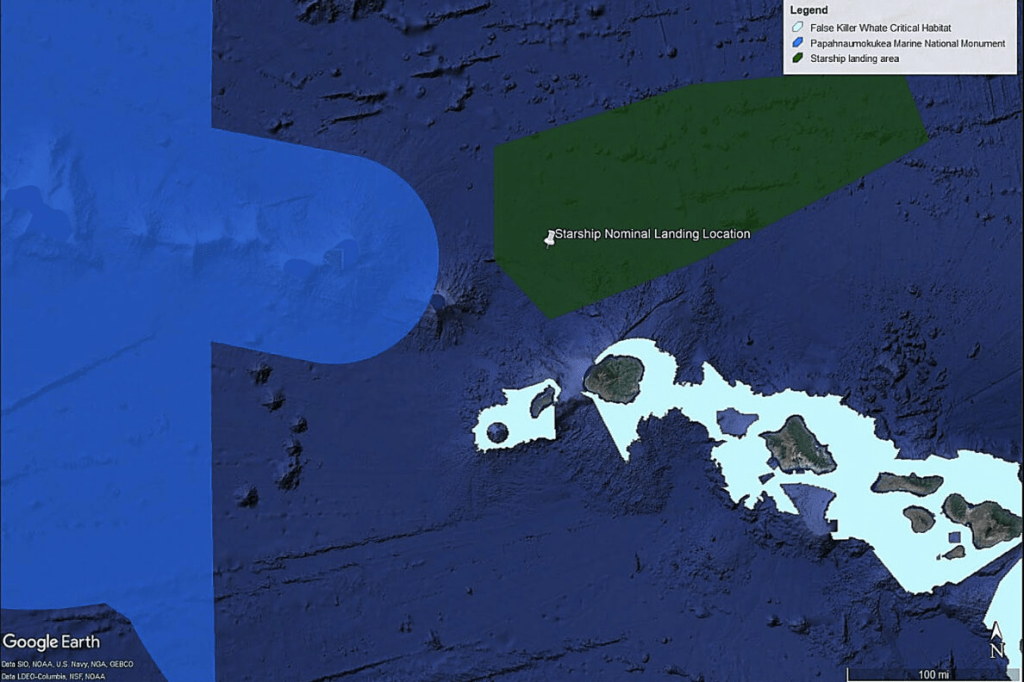
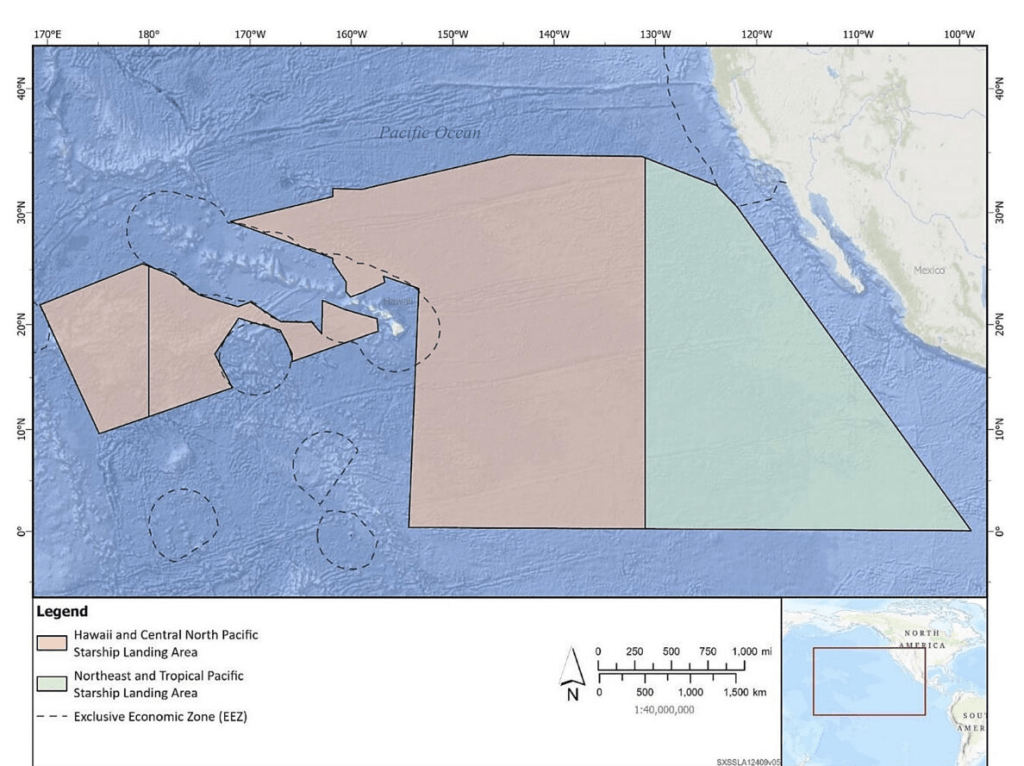
What most folks don’t know or realize is that Starship was always going to blow up when it crashlanded in the Pacific Ocean, just 62 nautical miles north of Kauai and a few hundred miles east of the Papahanaumokuakea Marine National Monument.

In the next test launch, which Musk boasted will happen in the next few months, the world’s largest spaceship will descend toward Earth in free fall and blow up upon impact with a force of a ton of TNT as fuel ignites in a great explosion. On a second and third launch test, Starship will break up in the atmosphere and tumble down and crash-land in a debris field several hundred miles southwest of the island chain.

SpaceX obtained a Federal Aviation Administration (FAA) commercial space launch license (experimental permit), rubber-stamped by the National Oceanic and Atmospheric Agency (NOAA) without any consultation of Hawaii’s people because, according to an email I received from the FAA: “No in-person public outreach was conducted in Hawaii as the Starship vehicle was planned to land outside of range for impacts to the residents of Hawaii.”

First of all, that is assuming everything goes exactly according to the plan, which we have all just witnessed doesn’t always happen. If the Starship goes off course by even a few degrees, the consequences could be catastrophic to Hawaii.

Secondly, I think most folks in Hawaii would agree that 62 miles north of Kauai is considered Hawaii culturally if not legally, and that is way too close for what is essentially a rocket bomb to crash-land.

SpaceX was not required to do a full environmental impact study (EIS), but a much-weaker environmental assessment (EA) that only requires the analysis of “nominal operations” or bestcase scenarios. Why was that allowed when the worst-case scenarios are so catastrophic?

In the EA, rather than doing a detailed analysis of the potential impact to marine mammals protected by the Endangered Species Act, NOAA wrote a “Biological Opinion” that argued “less than one” animal would be harmed by a 100 ton steel rocket exploding with the energy of a small nuclear bomb.

It came to that conclusion because it analyzed only one “nominal” scenario in which the rocket hits the water exactly horizontal to the surface with the fuel tanks orientated on top, which is impossible to control or predict. If the explosion is above water, NOAA argues, only a fraction of the energy will be transmitted into the ocean and travel deep enough to harm any of the 30 endangered species of whales, sharks, turtles, monk seals, dolphins and rays in Hawaii.

The EA has many unsubstantiated claims, such as no animals would be near the surface of the water during the crash — even though most are mammals that surface to breathe air.

It ignored the fact that Humpback whales migrate through the target “action area.” It assumed that most of the debris will be large enough to sink to the bottom of the ocean without encountering and injuring animals — but if any does drift into the Papahanaumokuakea Marine National Monument, then the Coast Guard would be sent to clean it up.

This alone is reason to contest the EA and demand an EIS since NOAA and the Office of Hawaiian Affairs co-manage Papahanaumokuakea and OHA should have been consulted, but was not.

The FAA and NOAA analyses are flawed, and both are failing in their duty to protect the people of Hawaii from extreme corporate and federal government abuse.

Hawaii must not become collateral damage and a colonized sacrifice zone for the government’s privatization of the space program and a billionaire’s personal ambition and corporate profits.

At minimum, the FAA must suspend the SpaceX license, conduct a full EIS and include the residents of Hawaii in the review process. The best plan is to ban SpaceX from trashing people and planet in Musk’s ego trip to Mars.

ISLAND VOICES

Lynda Williams is an environmental activist and investigative science journalist living in Hilo.

https://www.staradvertiser.com/2023/04/27/editorial/island-voices/column-hawaii-needs-input-on-spacex-ocean-landing-plan/

Look Before You Launch: What NEPA Requires of the FCC

From the Natural Resources Defense Council

by SHARON BUCCINO Senior Director, Land Division, Nature Program
September 8, 2021

Who knew that the Federal Communications Commission (FCC) is an environmental agency?  But taking the environment into account is what Congress requires of the Commission and what the public needs from it.  Passed over 50 years ago, the National Environmental Policy Act (NEPA) recognized the continuing responsibility of the entire federal government “to use all practicable means . . . to attain the widest range of beneficial uses of the environment without degradation, risk to health or safety, or other undesirable and unintended consequences.”  42 U.S.C. 4331(b).  If we are to sustain the one earth we have to live on, all federal agencies must take into account the impact their actions have on the environment.

Yet, earlier this year, the FCC authorized SpaceX to deploy almost 3,000 low-earth orbit satellites as part of the company’s Starlink system – a mega-constellation to provide satellite-based internet services.  Several other companies, including Amazon, are also pursuing similar mega-constellations of satellites to provide internet services around the world.  Never before have humans put so much into space.  With the FCC’s licensing approval, SpaceX alone will launch more satellites in the next 15 years than have been put in space over all of human history. 

This licensing is exactly the kind of federal action that Congress intended to be taken only after a thorough assessment of its potential environmental impacts.  As the Supreme Court said when reviewing a proposed ski resort in a national forest, “NEPA ensures that important effects will not be overlooked or underestimated only to be discovered after resources have been committed or the die otherwise cast.”

The FCC, however, has chosen to brush aside its environmental review responsibilities.  NEPA requires federal agencies to include “a detailed statement” (an Environmental Impact Statement or EIS) regarding the environmental impact of any “major Federal actions significantly affecting the quality of the human environment.”  If the agency is uncertain about whether its action will significantly affect the environment, it can prepare an Environmental Assessment (EA) to determine if a Finding of No Significant Impact (FONSI) is justified.  The FCC has done neither.  Instead, the Commission has categorically excluded all of its actions from NEPA review, identifying only a few limited exceptions in its regulations.  47 C.F.R. 1.1306.  Such widespread, indiscriminate use of categorical exclusions (CEs) belittles NEPA’s mandate.

Environmental harm from the proposed satellite mega-constellations is not mere speculation.  The increase in commercial satellites has already created significant light pollution.  Designed with a short useful life, the Starlink satellites will add significant debris and chemicals to the atmosphere.  In particular, combustion of satellites upon re-entry produces significant quantities of alumina.  Alumina can deplete the ozone layer we have worked so hard internationally to protect.  It can also increase global warming, whose catastrophic consequences we seem to be experiencing almost every day.  As two scientists recently warned in their peer-reviewed article, Starlink’s deployment “risks multiple tragedies of the commons, including tragedies to ground-based astronomy, Earth orbit, and Earth’s upper atmosphere.”    

NEPA doesn’t prohibit the FCC’s authorization of commercial wireless communication services from space, but it does require that the FCC analyze the environmental impacts of doing so before the Commission authorizes the launch.  The FCC has consistently refused to do so.

The FCC’s blind approach to satellite launch approval is yet the latest example of the Commission’s disregard for its environmental responsibilities.  In 2018, the FCC changed its rules to eliminate the application of NEPA (as well as the National Historic Preservation Act) to its authorization of small-cell networks increasingly relied upon to provide 5G services across the country.  NRDC, together with 16 Indian Nations, sued the FCC.  A federal court found the FCC’s action unlawful.

More recently, the FCC terminated its inquiry into the adequacy of its health standards for radio-frequency radiation without changing any of the limits – even though these limits are over 20 years old.  Again, the courts found the FCC’s action unlawful. 

The public deserves better from its servants at the FCC.  We face a pivotal moment as commercial communication moves into space at a scale never seen before.  Congress anticipated such moments when it passed NEPA.  By working with experts both inside and outside the government, the FCC can collect the information it needs to assess the environmental impacts of its actions before it takes them.  Launching before looking serves no one.

https://www.nrdc.org/experts/sharon-buccino/look-you-launch-what-nepa-requires-fcc
With additional links

Popular Mechanics: Increased Spaceflight Will Warm Earth’s Stratosphere 4 Degrees

From Popular Mechanics
June 28, 2022

Excerpt:

Black carbon in the atmosphere is like dressing Earth in a black shirt on a sunny day. It attracts and holds heat, leading to overall warming of the atmosphere. Airplanes also emit carbon pollution in this way, but there are a few key differences. First, airplanes emit respectively less carbon because they’re taking off in a way that doesn’t fight physics as much. And second, virtually all commercial airliners max out in the troposphere, one layer below the ozone-key stratosphere. (For what it’s worth, airlines are working to reduce carbon emissions and have been testing things like a hydrogen airliner and a partly electric airliner.)

For its study, NOAA used today’s baseline for carbon pollution, which is 1,000 tons of rocket soot per year. Then the team multiplied that figure by 10, which it says is a believable estimate given the recent increase in rocket launches, as well as global plans over the next few decades. At this projected rate, the amount of rocket fuel soot in the stratosphere would raise the temperature in that layer by up to 4 degrees Fahrenheit.

It’s the rising temperature that, in turn, affects the ozone layer. Well, it’s not just that. The rising temperature also affects atmospheric circulation, which is the complex overlay of wind currents that push air all around the world all the time—like jet streams or polar vortices. The rising temperature NOAA is forecasting will dampen some jet streams by as much as 3.5 percent. Both the rising temperature and the change in the jet streams will reduce ozone in global latitudes north of Houston, Texas, by as much as 4 percent.

[Note: This is only one mechanism of ozone loss that NOAA modelled.]

https://www.popularmechanics.com/space/rockets/a40433989/increased-spaceflight-will-hurt-the-ozone-layer/

Study: Climate and Ozone Impacts of Black Carbon Emissions From Global Rocket Launches

Published in Journal of Geophysical Research: Atmospheres
June 1, 2022

The Climate and Ozone Impacts of Black Carbon Emissions From Global Rocket Launches

Christopher M Maloney, Robert W Portmann, Martin N Ross, Karen H Rosenlof

First published: 01 June 2022

https://doi.org/10.1029/2021JD036373

  • Abstract

Aerosol emissions from spaceflight activities play a small but increasing role in the background stratospheric aerosol population. Rockets used by the global launch industry emit black carbon (BC) particles directly into the stratosphere where they accumulate, absorb solar radiation, and warm the surrounding air. We model the chemical and dynamical response of the atmosphere to northern mid-latitude rocket BC emissions. We initially examine emissions at a rate of 10 Gg per year, which is an order of magnitude larger than current emissions, but consistent with extrapolations of space traffic growth several decades into the future. We also perform runs at 30 and 100 Gg per year in order to better delineate the atmosphere’s response to rocket BC emissions. We show that a 10 Gg/yr rocket BC emission increases stratospheric temperatures by as much as 1.5 K in the stratosphere. Changes in global circulation also occur. For example, the annual subtropical jet wind speeds slow down by as much as 5 m/s, while a 10%–20% weakening of the overturning circulation occurs in the northern hemisphere during multiple seasons. Warming temperatures lead to a ozone reduction in the northern hemisphere by as much as 16 DU in some months. The climate response increases in a near linear fashion when looking at larger 30 and 100 Gg emission scenarios. Comparing the amplitude of the atmospheric response using different emission rates provides insight into stratospheric adjustment and feedback mechanisms. Our results show that the stratosphere is sensitive to relatively modest BC injections.

  • Key Points
  • The increased stratospheric BC burden from rocket launches warms the stratosphere
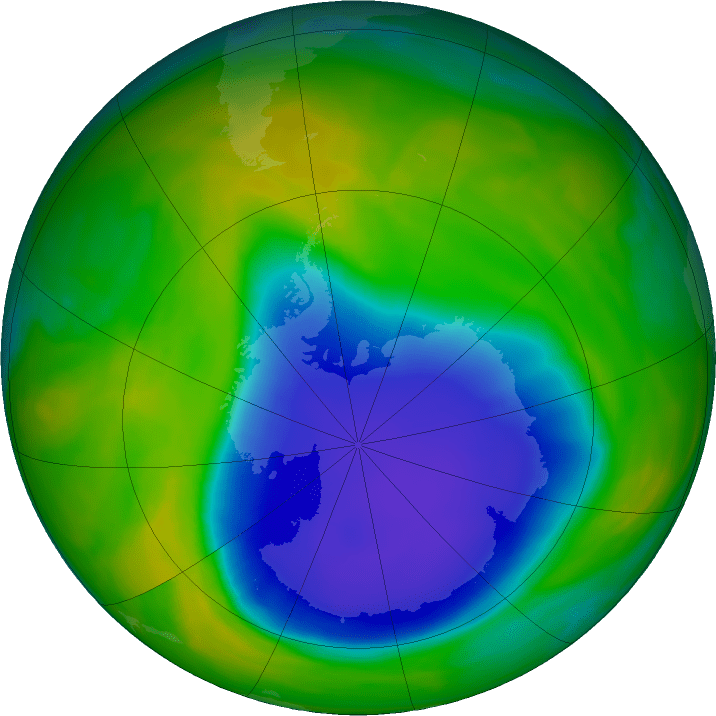
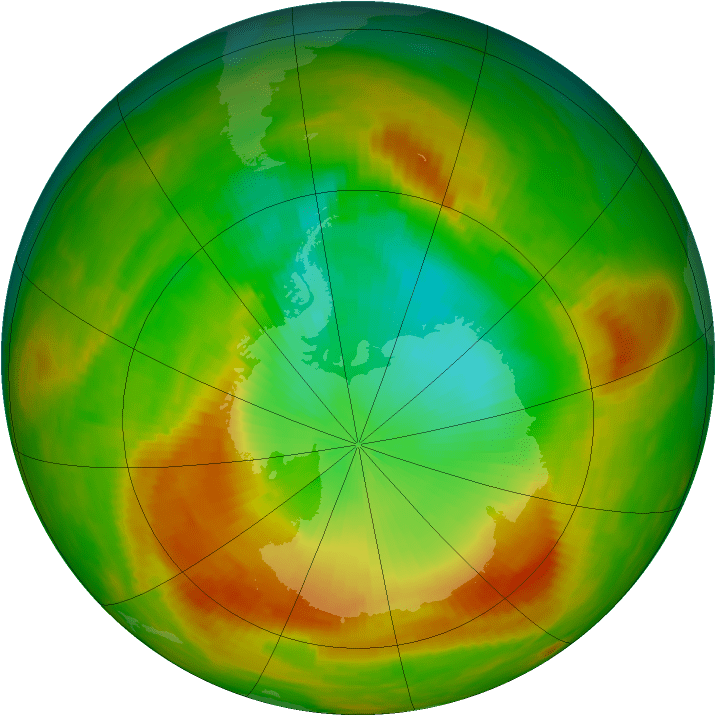
  • Stratospheric BC-induced heating causes shifts in stratospheric dynamics, year-round NH ozone loss, and a stronger Antarctic ozone hole
  • The climate response scales in a near linear fashion with increasing rocket launch emissions
  • Plain Language Summary

Emissions from spaceflight activities play an increasing role in the background stratospheric aerosol population. Rockets used by the global launch industry emit black carbon particles directly into the stratosphere where they accumulate, absorb solar radiation, and warm the surrounding air. We model the climate response of the stratosphere to an annual, black carbon emission source from rocket launches. We initially examine an emission rate of 10 Gg per year, an order of magnitude larger than current emissions but plausible within the next two decades based upon recent trends in space traffic growth. We also perform runs at 30 and 100 Gg per year in order to better understand the atmosphere’s response to rocket black carbon emissions. We show that the rocket black carbon increases stratospheric temperatures and changes the global circulation, both of which cause a reduction in the total ozone column, mainly in the northern high latitudes. Comparing the amplitude of the atmospheric response using different emission rates provides insight into stratospheric adjustment and feedback mechanisms. Our results show that the stratosphere is sensitive to relatively modest black carbon injections.

https://agupubs.onlinelibrary.wiley.com/doi/10.1029/2021JD036373

NASA to test nuclear-powered rocket engine by 2027

From Al Jazeera
January 24, 2023

The top official at the United States space agency NASA has said the country plans to test a spacecraft engine powered with nuclear fission by 2027, an advancement seen as key to long-haul missions including a manned journey to Mars.

NASA will partner with the US military’s Defense Advanced Research Projects Agency (DARPA) to develop the nuclear thermal propulsion engine and launch it into space, NASA administrator Bill Nelson said on Tuesday. The project has been named the Demonstration Rocket for Agile Cislunar Operations or DRACO.

A nuclear thermal rocket engine uses a fission reactor to generate extremely high temperatures. The heat is then transferred to a liquid propellant, which “is expanded and exhausted through a nozzle to propel the spacecraft”, according to NASA.

“A nuclear thermal rocket can be three or more times more efficient than conventional chemical propulsion,” according to the agency.

…For its part, the International Atomic Energy Agency (IAEA) has long hailed nuclear thermal propulsion as critical to journeying farther into space.

…In a statement, Stefanie Tompkins, the director of DARPA, hailed the plans to develop the “leap-ahead” advance.

“The space domain is critical to modern commerce, scientific discovery, and national security,” she said.

Full article with video: https://www.aljazeera(dot)com/news/2023/1/24/nasa-to-test-nuclear-fission-powered-spacecraft-engine-by-2027

Ecocide from space

From Cellular Phone Task Force
December 14, 2022
By Arthur Firstenberg

NUMBER OF OPERATING SATELLITES PASSES 7,000

On the evening of Thursday, December 8, 2022, OneWeb launched 40 satellites from Cape Canaveral, Florida, bringing the total number of active satellites in orbit around the Earth to more than 7,000. These cell towers in space are altering the electromagnetic environment of the entire planet and are debilitating and exterminating all life on it.

Even the first fleet of 28 military satellites launched by the United States caused a worldwide pandemic of influenza when they became operational on June 13, 1968. The Hong Kong flu began in June 1968, lasted through April 1970, and killed up to four million people worldwide. To understand why requires a proper understanding of our connection to the universe and what it is that really gives us life and health, and makes our bodies move. In a sense, we are all puppets on invisible strings that connect us to heaven and earth, strings that resonate at the age-old frequencies of the biosphere in which we live, the space between Earth and Sky, whose dimensions never change. And when we modulate and pulsate those strings at random from thousands of locations in space, we change the beautiful music of the earthly orchestra into a discordant chaos that scatters bodies all over the world, helpless before it.

On March 24-25, 2021, the chaos was brought to a new level, that the world now accepts as normal. In that 24-hour period, a record 96 satellites were launched into space on a single day—60 by SpaceX and 36 by OneWeb—and on the same day SpaceX dramatically increased the speed of its satellite internet connections. On that day, people all over the world suddenly could not sleep, were weak and exhausted, had muscle spasms, and hurt and itched all over, especially in their feet and legs. They had skin rashes, were dizzy and nauseous, and had stomach aches and diarrhea. The ringing in their ears was suddenly amplified. Their eyes were inflamed, and their vision suddenly worsened. They had heart arrhythmias, and their blood pressure went out of control. Some had nosebleeds, or coughed up blood. They were anxious, depressed or suicidal, and irritable. Their cats, dogs, chickens, goats and cows were sick at the same time.

Continue reading “Ecocide from space”

December 16: NASA and French launch SWOT to radar Earth’s ocean, lakes and rivers

“This is the planet we care most about.”

Laurie Leshim, JPL Pasadena

REALLY ? ? ? ? ?

Posted at Phys.org

In this image made from video provided by NASA, a SpaceX rocket carrying the Surface Water and Ocean Topography satellite lifts off from Vandenberg Space Force Base in California, Friday, Dec. 16, 2022. Credit: NASA via AP

Satellite launched to map the world’s oceans, lakes, rivers
by Marcia Dunn

December 16, 2022

Nicknamed SWOT—short for Surface Water and Ocean Topography…About the size of a SUV, the satellite will measure the height of water on more than 90% of Earth’s surface, allowing scientists to track the flow and identify potential high-risk areas. It will also survey millions of lakes as well as 1.3 million miles (2.1 million kilometers) of rivers.

The satellite will shoot radar pulses at Earth, with the signals bouncing back to be received by a pair of antennas, one on each end of a 33-foot (10-meter) boom.

It should be able to make out currents and eddies less than 13 miles (21 kilometers) across, as well as areas of the ocean where water of varying temperatures merge.

NASA’s current fleet of nearly 30 Earth-observing satellites cannot make out such slight features. And while these older satellites can map the extent of lakes and rivers, their measurements are not as detailed, said the University of North Carolina’s Tamlin Pavelsky, who is part of the mission.

Perhaps most importantly, the satellite will reveal the location and speed of rising sea levels and the shift of coastlines, key to saving lives and property. It will cover the globe between the Arctic and Antarctica at least once every three weeks, as it orbits more than 550 miles (890 kilometers) high. The mission is expected to last three years.

Laurie Leshin, the director of NASA’s Jet Propulsion Laboratory in Pasadena, California, noted that while the agency is known for its Mars rovers and space telescopes, “this is the planet we care most about.”

To read the complete article:
phys[dot]org/news/2022-12-satellite-world-oceans-lakes-rivers.html

  1. When were the public hearings?
  2. Where were the public notices for this worldwide project?
  3. Where is the environmental review?
  4. Who approved this?
  5. Did they ask you?